
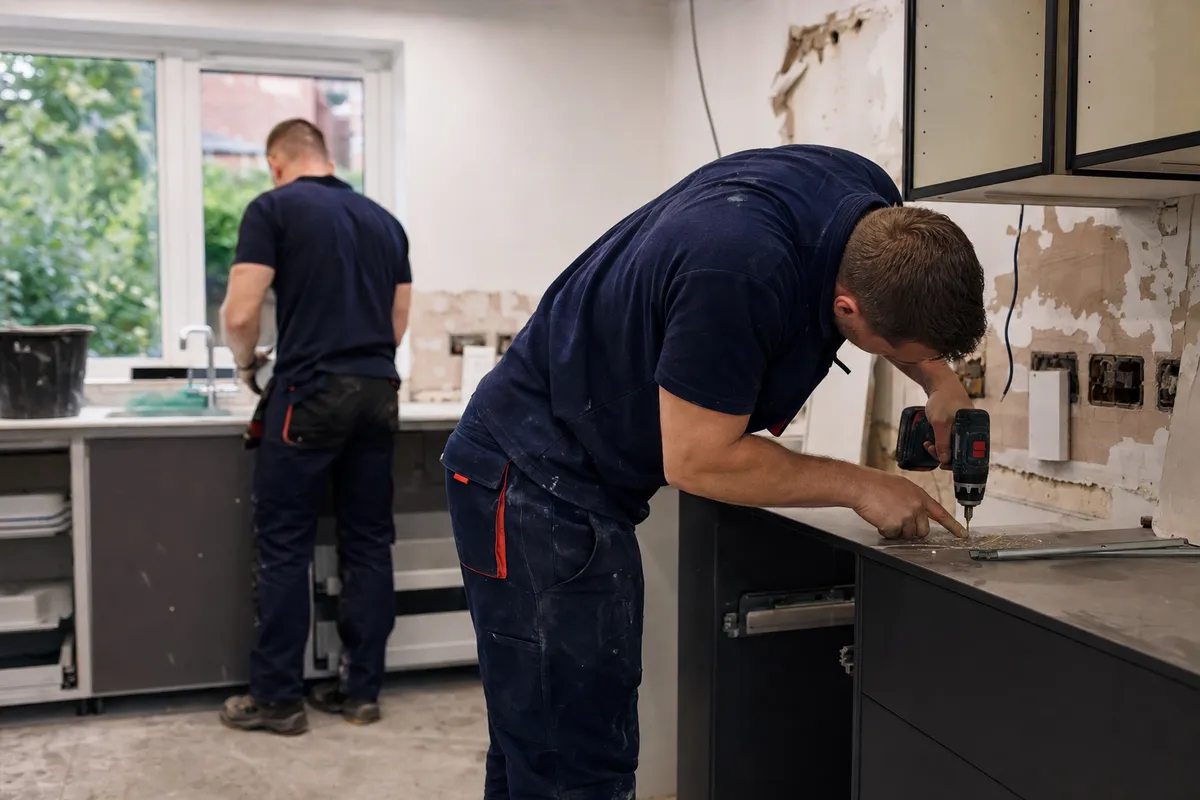
A kitchen remodel installation, meaning a full remodel with layout changes, new services and plastering, usually takes three to five weeks on site, plus any wait for worktop templating. A simpler like-for-like kitchen swap typically takes one to two weeks. The biggest cause of overruns is not the fitting, it is decisions made late and materials that arrive wrong or damaged.
When someone says a kitchen takes a week, they mean a straight swap: same layout, same services, new units and doors. When someone says a month, they mean a remodel. Both are true, and the difference between them is decided before anyone picks up a drill. This is the realistic sequence for each, and where the time actually goes.
The straight swap: one to two weeks
If the sink stays where the sink was and the cooker stays where the cooker was, the job is fast. Strip-out takes a day or two, fitting units and appliances takes three to five days, and finishing takes the rest. Laminate worktops fit the same week. The main risk to a swap is discovering the old kitchen was hiding something, most often perished plaster or dated wiring that fails safe-to-connect checks, so a sensible quote allows for some making good behind the units.
The full remodel: three to five weeks on site
Moving the layout means moving services, and that changes the shape of the project entirely. A typical remodel runs: strip-out and any structural work in week one, first-fix plumbing and electrics plus plastering across weeks one and two, drying time, then unit fitting in week three, and second fix, tiling and decoration in weeks four and five. If a wall is coming out to open the kitchen into another room, add the engineer, the steel and building control to the front of that programme. Drying time is the stage people resent and the stage worth protecting: fit units against damp plaster and the carcasses can swell, doors drop out of alignment, and the snag list writes itself.
The worktop wait
Stone, quartz and solid surface worktops are templated only after base units are in, then fabricated off site for one to two weeks before fitting. Plan around it rather than being surprised by it: the plumber cannot make the final sink connection until the worktop is in, so book the return visit when you book the templating. This single scheduling detail separates kitchens that finish crisply from ones that limp through an extra fortnight.
What actually causes overruns
It is rarely the fitting. The delays that recur on real projects are late decisions, especially on tiles and appliances, materials arriving damaged with a two-week reorder lead time, changes made after first fix when moving a socket means reopening a finished wall, and drying time being squeezed because the programme was optimistic. The best thing you can do for your own timeline is have every item chosen, ordered and checked before strip-out day. A kitchen project with everything on site before it starts nearly always finishes on programme. One waiting on decisions nearly never does.
Questions
Related questions
Can I live in my house during a kitchen installation?
Almost everyone does. Set up a temporary kitchen in another room with a kettle, microwave and fridge before the strip-out starts, and agree with your builder which days water and power will be off. The hardest stretch is usually the gap between units going in and the worktops arriving, when the room looks nearly done but is not usable.
Why do worktops add weeks to a kitchen project?
Stone and solid composite worktops cannot be templated until the base units are fitted, because the template must match the real room, not the drawing. After templating, fabrication typically takes one to two weeks before fitting. Laminate avoids this wait entirely, which is one reason a budget kitchen can finish faster than a premium one.
Should the same company supply and fit the kitchen?
It removes the most common argument in kitchen projects, which is whose fault a problem is. Separate supply and fit can save money, but you become the coordinator between the two, and any defect sits in the gap. If you split it, make sure the fitter sees and approves the design before you order anything.
What should be finished before the kitchen fitter arrives?
All first-fix plumbing and electrics in their new positions, plastering done and dry, and flooring decisions made. A fitter who arrives to find services in the wrong place loses days, and a fitted kitchen installed before wet plaster has dried can suffer swollen carcasses. Sequence is where good kitchen projects are won.