
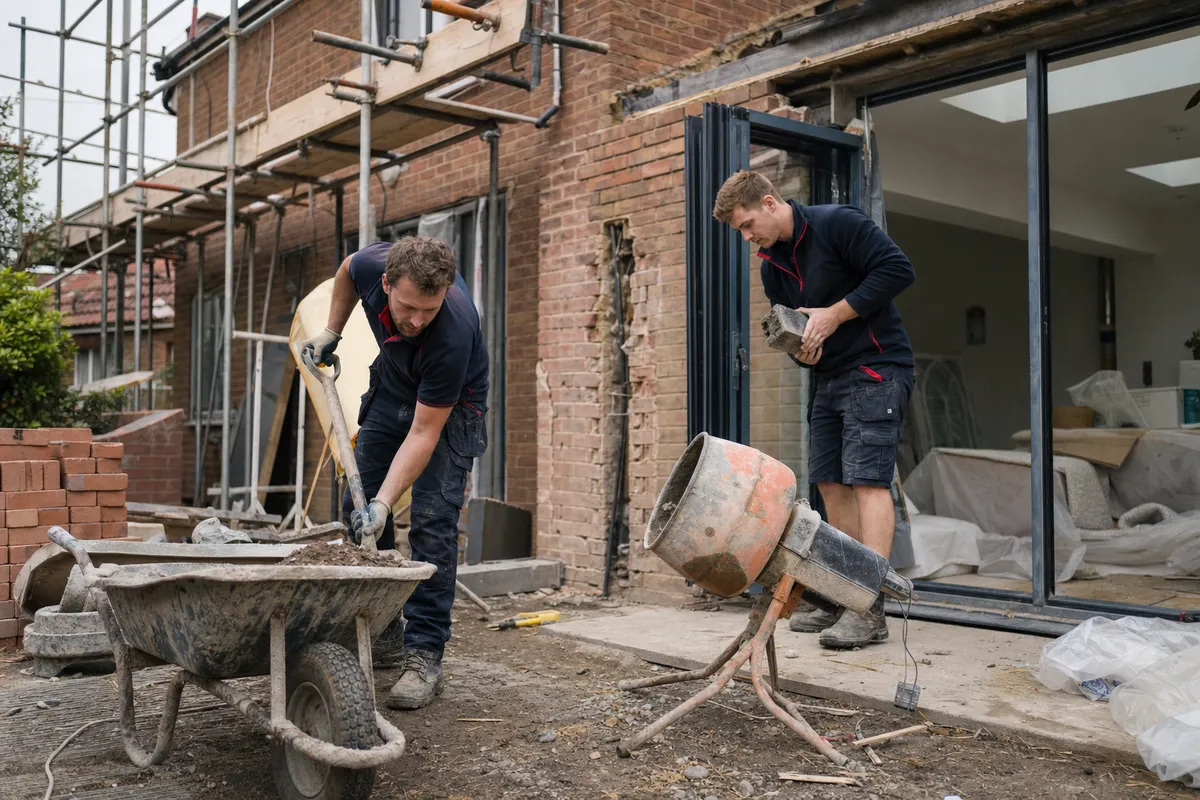
Renovation usually adds more value per pound spent on an ordinary house in an ordinary street, because you are improving an asset that already exists. Building new wins where the existing building is beyond economic repair or the plot is worth more than the house on it. The deciding number in both cases is the ceiling price of the street, not the cost of the work.
This question usually arrives disguised as another one: should I buy the tired house and do it up, or find a plot and build exactly what I want? The honest answer depends less on construction costs than most people expect, and more on two numbers that exist before any builder is involved: what the finished property will sell for, and what the unimproved asset costs you to acquire.
The case for renovation
Renovating an ordinary house in a decent street is the more forgiving investment. The shell, the services connection, the garden and crucially the planning status all exist already, and every pound goes into improvement rather than replacement. Well-chosen renovation work regularly returns more than it costs: reconfigured layouts, an additional bathroom, and kitchens brought up to the standard of the street are reliable value-adders. The risk is discovery. Until the strip-out, part of your budget is a guess, which is why a full survey before purchase and a contingency of at least 10 to 15 percent are not optional extras on a value-driven project.
The case for building new
A new build wins in specific circumstances. VAT at zero percent on construction is a real advantage worth tens of thousands on a whole-house budget. You get modern energy performance without retrofit compromise, a structural warranty, and a building with no hidden history. The route makes clear financial sense when the plot is the valuable thing and the existing house is not, or when the building is so far gone that renovation means replacing most of it anyway. What the spreadsheet often understates is time: demolition, design, planning and construction routinely take two years or more before any value is realised, and you carry finance costs for all of it.
The number that decides it: the ceiling price
Both routes answer to the same constraint. Every street has a realistic maximum sale price, and no specification pushes far beyond it. The working sum is simple: take the ceiling price, subtract what the property or plot costs to acquire, subtract selling and finance costs, and what remains is the whole budget for works and profit. Run that sum for both routes and the decision often makes itself. A £150,000 rebuild on a street that tops out £80,000 above the purchase price is a hobby, not an investment, however beautiful the result.
An honest way to choose
Get the ceiling price from two local agents before anything else. Have the existing building surveyed properly, because the renovate-or-rebuild question often turns on the condition of the shell. Then cost both routes with contingency included and compare what each leaves against that ceiling. And allow one honest non-financial question into the process: the best-value route you will not enjoy living through is not always the right one. Value is the reason to do the sums, but it is rarely the only reason people build.
Questions
Related questions
What is a ceiling price and why does it matter so much?
It is the realistic maximum a buyer will pay on your street, regardless of specification. Once your combined purchase and works cost approaches it, every further pound spent returns less than a pound in value. Estate agents will tell you the figure for free, and it should be the first number in any build-or-renovate decision, not the last.
Is VAT really different between new builds and renovations?
Yes, and it is one of the few genuine financial advantages of building new. New build construction is zero-rated for VAT, while most renovation work carries the standard rate. Reduced rates exist for properties empty for two years or more and for some conversions, so a long-empty renovation project can claw some of that gap back.
When is a house not worth renovating?
When the structure itself is failing, with problems like widespread movement, failed foundations or systemic damp in the fabric, the renovation budget becomes a rebuild budget with extra steps. A rough test: if repairing the shell costs more than half of what a new shell would, and the result will still be a compromised building, the balance tips toward demolition and rebuild.
Which route is riskier for a first-time project?
Renovation carries discovery risk, because you find out what the building is hiding after you own it. A new build carries programme and finance risk, with more approvals, longer timescales and higher upfront outlay before any value exists. For most first projects, a well-surveyed renovation is the easier risk to price and manage.