
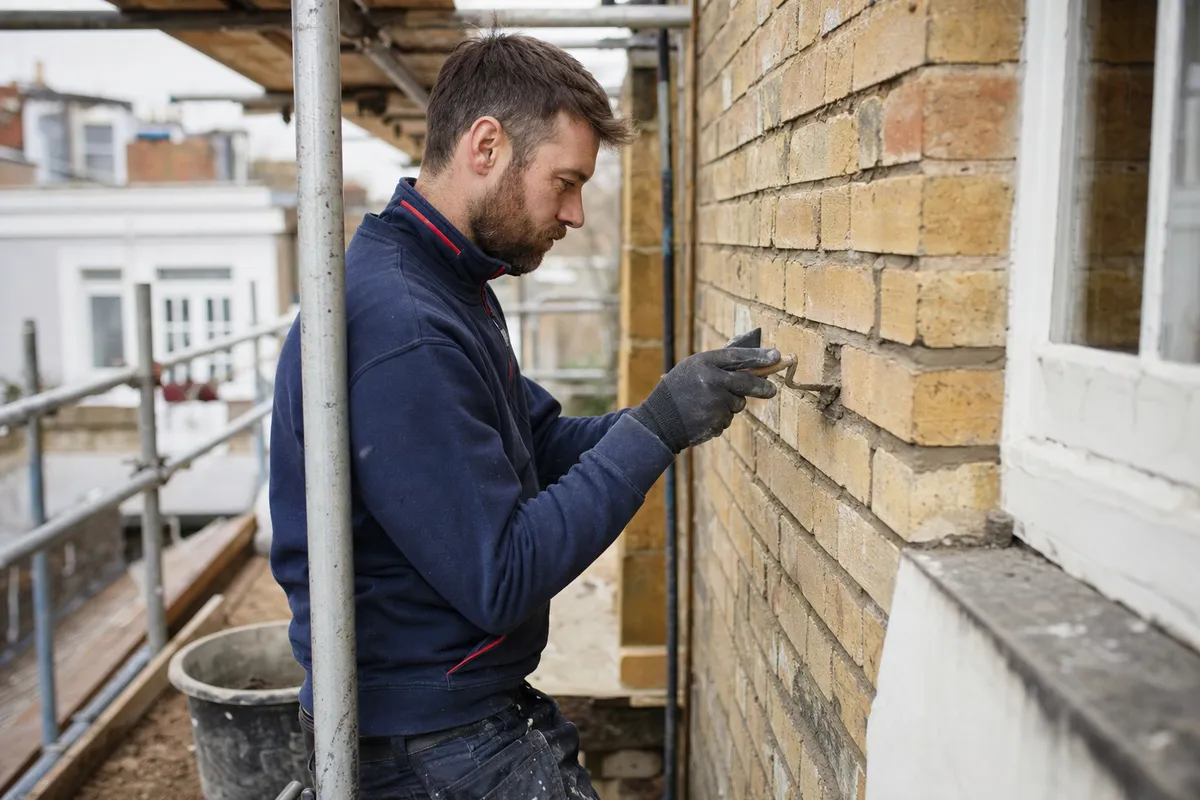
In 2026, repointing typically costs £40 to £75 per square metre in the UK, so a gable end wall commonly runs £1,500 to £3,500 and a whole three-bed semi £5,000 to £12,000 including scaffold. Lime mortar work on older properties sits at the top of those ranges because the raking out and the pointing itself both take longer to do properly.
Repointing is one of those jobs where the price of doing it properly and the price of doing it badly can look identical on a quote, and the difference only shows up years later when the mortar falls out or the bricks start to crumble. Here is what fair money looks like in 2026, and how to tell which kind of job you are being offered.
Typical repointing prices in 2026
- Per square metre: roughly £40 to £75, with lime mortar work at the upper end
- Single gable end or elevation: commonly £1,500 to £3,500 including access
- Whole three-bed semi: roughly £5,000 to £12,000 with scaffold
- Chimney repointing: typically £600 to £1,500, driven almost entirely by access
- Patch repairs: usually priced by the day, at roughly £250 to £400 per day for a skilled bricklayer
Scaffold is the quiet variable in all of these. Ground-floor work off trestles is cheap to access; anything above that needs proper access, and on a full house the scaffold can be a fifth or more of the bill.
Why quotes for the same wall vary so much
The labour is in the raking out. Old mortar should be removed to a depth of around twice the joint height, by hand or with careful mechanical cutting that does not widen the joints or nick the brick faces. That is slow, dusty, unglamorous work, and it is the part a cheap quote quietly shrinks. A price well below the going rate usually means shallow preparation and mortar smeared over the top of failed joints, which is cosmetic at best and temporary always.
Matching the mortar to the house
A wall built before the 1920s almost certainly went up in lime, and it should be repointed in lime. Cement pointing on soft old brick traps moisture, pushes evaporation through the brick face and destroys it one winter at a time. On modern brickwork, a sand and cement mix is correct, and the skill shifts to matching the colour and the joint profile so the repair disappears. Either way, ask the builder what mix they intend to use and why. A confident, specific answer to that question is worth more than any online review.
Getting a quote you can trust
Ask for the price broken into access, preparation and pointing, ask what depth the joints will be raked to, and ask to see a small sample area completed before the whole wall proceeds. Weather matters too: mortar placed in frost or baking heat fails early, so a builder who talks about protecting fresh work is thinking beyond the day they get paid. Repointing done once, properly, is genuinely one of the best value repairs a brick house can have.
Questions
Related questions
How do I know if my house needs repointing?
Look for mortar joints that are crumbling, recessed well behind the brick face, or washing out at the base of walls after rain. Damp patches appearing inside on external walls are a later-stage sign. Sound mortar resists a key scraped along the joint; mortar that powders out needs attention before frost gets into it.
Why does lime mortar matter for older houses?
Houses built before roughly 1920 were built with soft bricks and lime mortar that flexes and breathes. Repointing them in hard cement traps moisture in the brick, which then spalls and crumbles while the mortar survives. The mortar should always be softer than the brick, so on period property, lime is not a preference, it is the correct specification.
How long does repointing last?
Done properly, with joints raked out to a sound depth and the right mortar mix, repointing should last 50 years or more. Done badly, with a smear of strong cement over old failed joints, it can start falling out within five. Longevity is almost entirely about preparation, which is exactly the part a cheap quote skips.
Can I repoint just the worst patches instead of the whole wall?
Yes, and on a wall that is mostly sound it is the sensible option. Expect patch repairs to be priced by the day rather than by the metre, and accept that new mortar will not perfectly match weathered joints at first. If more than about a third of a wall has failed, doing the whole elevation usually works out better value and looks right.